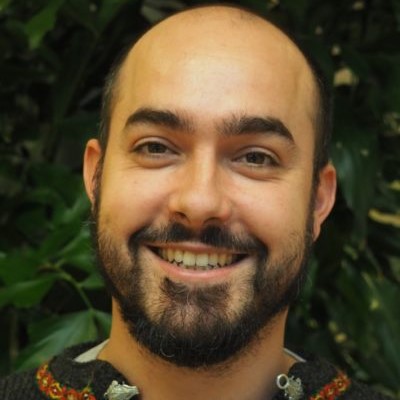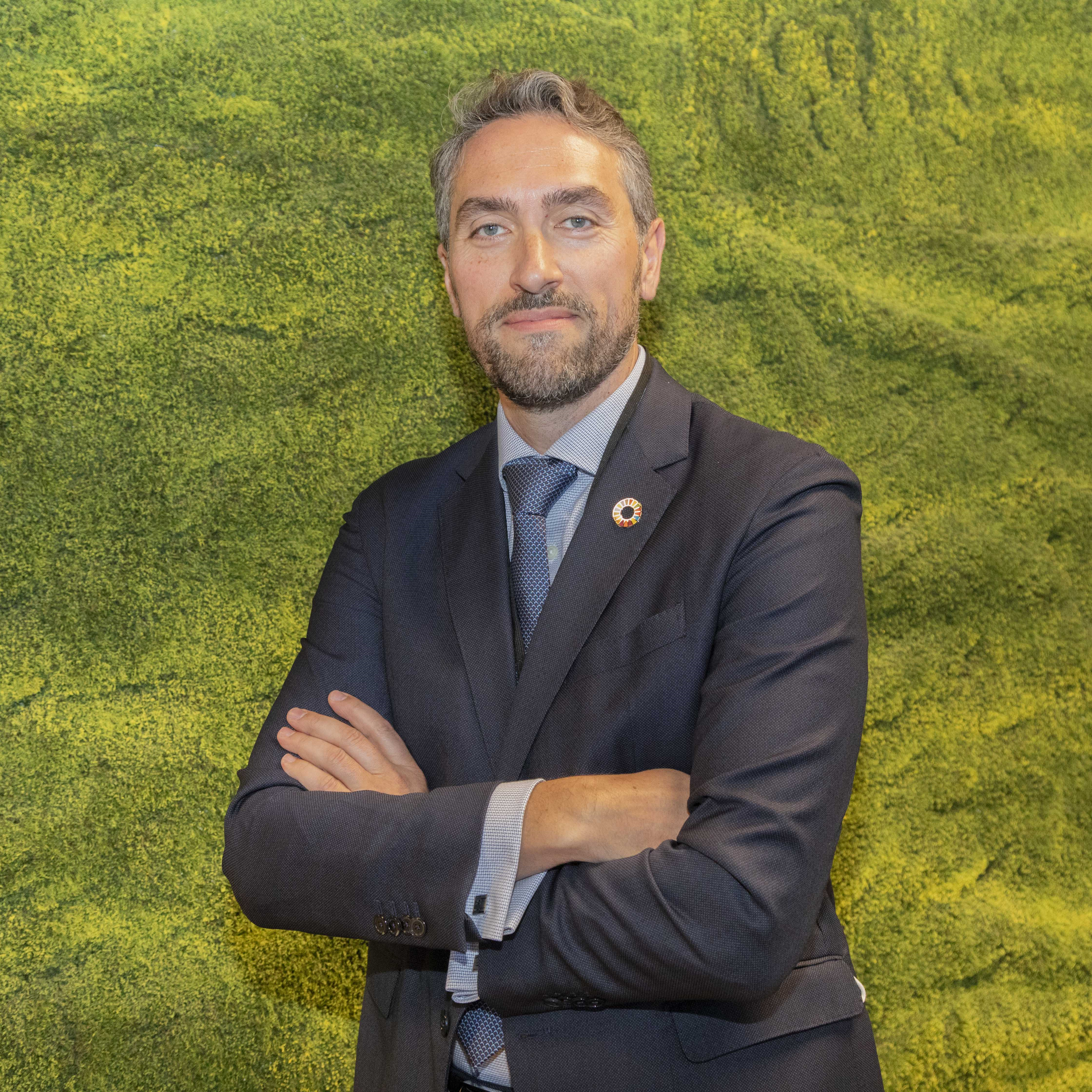
In this webinar, Federico Antonio Canu opened the session by welcoming participants to the first Global ESCO Network webinar of the year, highlighting the exceptional level of interest in the topic of white certificates (energy savings certificates) in Spain. He introduced the speaker, Carlos Ballesteros Barrado, Managing Director of ANESE, emphasizing Carlos’s extensive experience in energy efficiency across international, EU, and national spheres. Federico set the context by noting that white certificates provide “additional rewards for final energy savings to companies and individuals”, and expressed that participants could “very much look forward to learn” from Carlos.
Carlos began his presentation by assuring listeners, “It’s not pressure,” despite the large turnout, and outlined that his aim was to “explain the Spanish mechanism of white certificates and therefore promote ESCOs in Spain, Europe, and around the world.” He described ANESE as a cluster-like association with nearly 200 members, combining ESCOs, technology providers, financiers, and consultants to strengthen Spain’s energy efficiency ecosystem. Carlos then traced the origins of Spain’s white certificate system to the EU Energy Efficiency Directive and explained the dual mechanism: the National Energy Efficiency Fund and the White Certificates Scheme (KAIs), introduced in 2023 and partially inspired by the French model but with notable differences.
Carlos detailed how obligated parties (mainly electricity and gas retailers and fuel operators) can now fulfil up to 95% of their obligations via certificates rather than direct financial contributions. He noted the rapidly expanding scale of the system, with annual obligations reaching €1.9 billion and 9.42 TWh of required savings, commenting on the striking growth: “Every year is doubling.” He outlined key actors involved—obligated and delegated entities, verifiers, and regional authorities—and emphasized the importance of a strong verification framework to ensure traceability. He also explained standardized versus singular savings measures, highlighting that standardized catalogues accelerate verification while singular projects—especially in industry—often deliver the highest savings.
Carlos presented early results from the system’s rollout: more than 20,000 measures and roughly 8 TWh of requested energy savings, with particularly strong uptake in industry, transport, and services. He noted that the system is already outperforming expectations, saying it shows “the private sector believes this mechanism makes sense.” Looking to the future, he emphasized the need for continued growth, support for underrepresented sectors such as residential and agriculture, and the longer-term aspiration to “create a unified European market for energy savings” across France, Italy, Poland, and Spain.
During the Q&A session, Federico curated questions from the audience, including technical inquiries about baselines, aggregation, and measurement protocols. Carlos confirmed the use of IPMVP for singular measures and stressed the importance of designing baseline and monitoring strategies from the start. He explained that while standardized calculations rely on predefined data sheets, singular projects demand detailed verification and sometimes prior consultation with the national coordinator—especially for large or complex industrial actions.
A question on whether the scheme encourages innovation prompted Carlos to note that white certificates effectively shorten payback times, enabling investments that were previously unfeasible: “Thanks to the certificates, the return of investment goes down… That’s the most important point.” He clarified that the mechanism can stimulate the adoption of newer technologies, though impacts vary by sector. Another question concerned the applicability in small island states such as Mauritius. Federico and Carlos agreed that such systems can be adapted but only function well if real demand is created through mandatory obligations, supported by a robust regulatory and verification framework.
Carlos also clarified misconceptions regarding thresholds, explaining that singular measures have no minimum size and that Spain is working to improve aggregation options for small-scale actions (e.g., windows or EVs). He reiterated that Spain’s system is ex post, requiring demonstration of achieved savings, unlike some grant-based schemes.
The session concluded with Federico thanking Carlos for his “great presentation and insights”, inviting attendees to the International ESCO Symposium hosted by ANESE in Madrid on October 20–22, and reminding listeners of the next webinar on March 5, focused on risk mitigation instruments.
Download source
Share this
Sector: ESCO
Country / Region: Spain
Tags: energy efficiency directives, energy policies, ESCO, sustainable energy, White CertificatesKnowledge Object: eLearning