Overview:
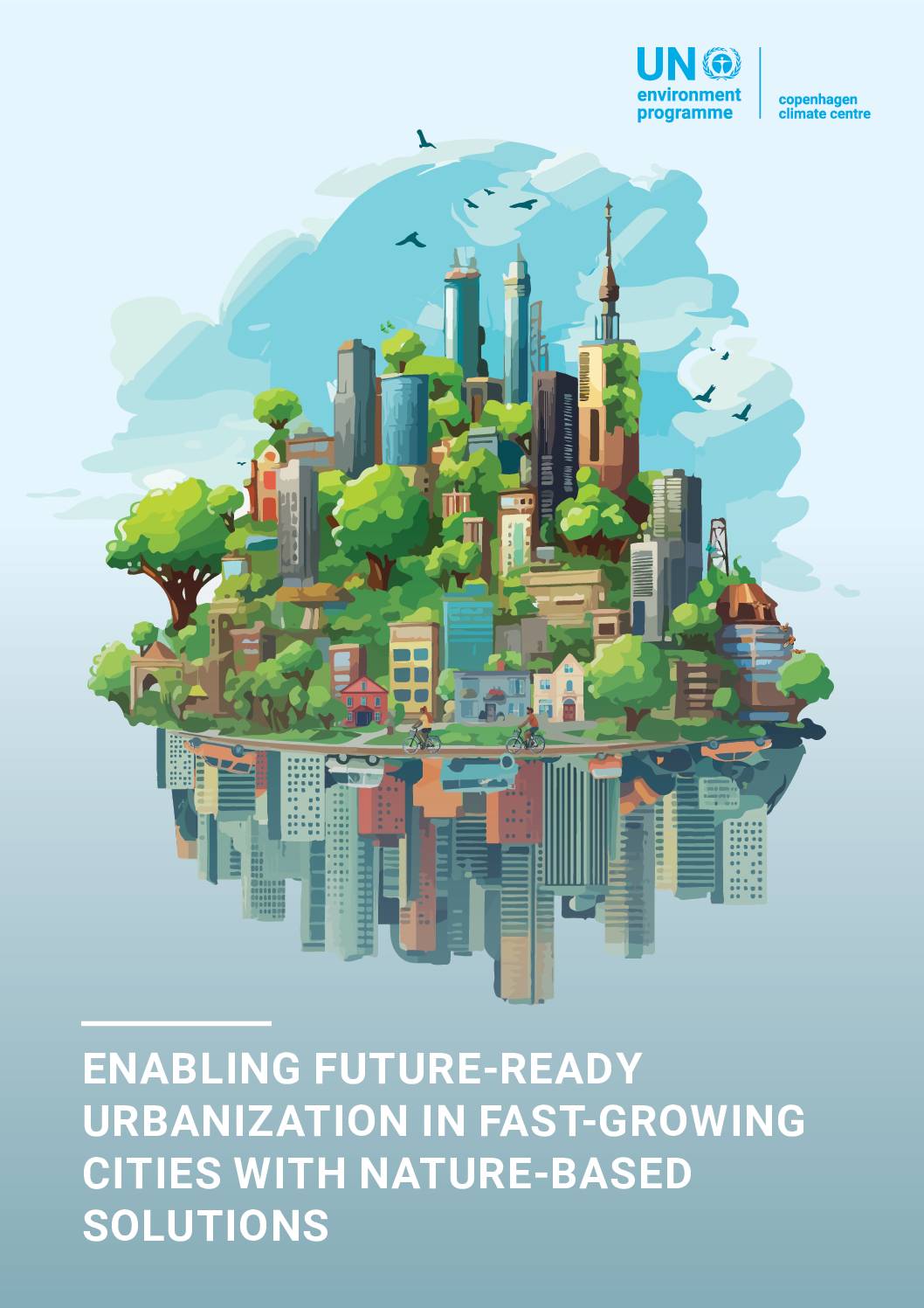
This policy brief by the UNEP Copenhagen Climate Centre explores how Nature-based Solutions (NbS) can help rapidly urbanizing cities—especially in low- and middle-income countries (LMICs)—adapt to climate change while promoting sustainable development. With urban populations in Asia, Africa, and Latin America growing at unprecedented rates, cities face mounting challenges such as climate hazards, infrastructure stress, and social inequalities. NbS offer cost-effective strategies to mitigate these risks by leveraging ecosystems for flood control, heat reduction, carbon sequestration, and biodiversity enhancement.
Key Insights:
- Urbanization & Climate Risks: Over 90% of global urban growth occurs in LMICs, increasing vulnerability to extreme weather, coastal flooding, and urban heat islands.
- Role of NbS: Actions like creating green corridors, urban forests, wetlands, and blue-green infrastructure can improve resilience, reduce greenhouse gas emissions, and deliver social and economic co-benefits.
- Barriers to Implementation:
- Capacity Gaps: Lack of municipal coordination, technical expertise, and climate data.
- Policy & Regulatory Challenges: Poor integration of NbS into urban planning and weak alignment between national and local policies.
- Financial Constraints: Limited private investment, complex valuation, and long-term returns hinder scalability.
- Recommendations:
- Close Capacity Gaps: Establish NbS officers, build evidence bases, and promote city-to-city knowledge exchange.
- Enhance Policy Mix: Mainstream NbS into building codes, land-use plans, and climate action strategies; align national and local frameworks.
- Address Finance Gap: Develop revenue-generating models (e.g., ecotourism fees), apply blended finance, and create bankable NbS projects.
Why It Matters:
NbS are essential for future-ready urbanization, offering integrated solutions that combine climate resilience, biodiversity conservation, and social equity. They help cities transition from grey infrastructure to green and blue systems, ensuring sustainable growth and improved quality of life.
This publication is a result of a technical workshop on urban NbS hosted by UNEP Copenhagen Climate Centre in 2024, focusing on building resilient cities and the role of NbS in urban mitigation and adaptation, as well as stakeholder consultations with practitioners on building resilient cities and the role of NbS.
Link to resource Download sourceShare this
Sector: Cities
Country / Region: Brazil, China, India, Mexico, Vietnam
Knowledge Object: Cities Cluster, Publication / Report
Publishing year: 2025